
The Thessalian Revolt
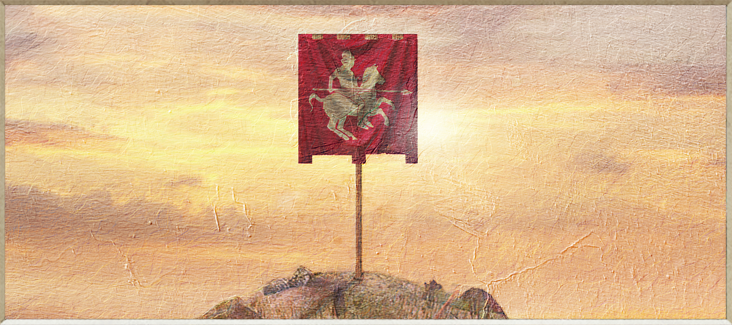
Breaks away: Thessalian League from The Antigonid Kingdom, or the rebels if they hold all four cities
The four Thessalian cities of Larissa, Pharsalos, Pherai and Trikka break away and form the Thessalian League. It mostly happens when a new Antigonid faction leader comes to power while the Antigonid Kingdom holds all four cities, with a much higher chance from turn 76 (252 BC) or once the Antigonid Kingdom has shrunk to 14 settlements or fewer.
Any campaign, whether the Antigonid Kingdom is played by a human or by the AI.
What sets it off
- Each time a new Antigonid faction leader comes to power, from turn 76 (252 BC) onwards, or earlier once the Antigonid Kingdom holds 14 settlements or fewer, there is a 25% chance of the revolt, provided the Antigonid Kingdom held Larissa, Pharsalos, Pherai and Trikka at the end of its last turn.
- If that chance does not apply or fails, each new Antigonid faction leader brings a further 5% chance of the revolt at any point in the campaign, again only if the Antigonid Kingdom held all four cities at the end of its last turn.
- If one of the four cities rebels while all four were in rebel hands at the end of the last Antigonid turn, there is a 50% chance of the revolt.
What happens
- Larissa, Pharsalos, Pherai and Trikka all rebel.
- All four cities pass to the Thessalian League, which did not exist until now.
- Each city gets a garrison at 0.01 times normal strength, drawn from Akontistai, Greek Slingers, Greek Archers, Thessalian Peltasts, Greek Hoplites, Thureophoroi, Prodromoi, Perrhaibian Cavalry, Xystophoroi and Thessalian Cavalry.
- When Larissa revolts, the Thessalian League receives 10,000 denarii.
- The revolt happens only once per campaign.
The settlements that revolt (4):
| Settlement | Held at the campaign start by | Settlement | Held at the campaign start by | Settlement | Held at the campaign start by |
|---|---|---|---|---|---|
| Larissa | Antigonid Kingdom | Pharsalos | Antigonid Kingdom | Pherai | Antigonid Kingdom |
| Trikka | Antigonid Kingdom |
Playing as the rebels
Only a human playing the Antigonid Kingdom is offered the rebels, and only when the revolt comes from a change of faction leader. Once the revolt has happened, at the end of an Antigonid turn a message titled 'The Thessalian League Declares its Independence from Macedon!' offers to let you play as the Thessalian League. If you accept, you switch to playing the Thessalian League and a government building is placed in Larissa, Pharsalos, Pherai and Trikka.
The in-game message: The Thessalian League Declares its Independence from Macedon!
Sensing their opportunity upon the death of the Macedonian king, cities across the rich plains of Thessaly have united and declared their independence. The Thessalians have long tolerated the rule of their northern neighbour, a lesser evil to the infighting that plagued them in the past. Yet, they have suffered much in the ceaseless wars of the successors. Pella must be reminded that the title of archon of the League is not inherited, but given!
HISTORICAL BACKGROUND
The Thessalian League existed as early as the archaic period, and so did its ties to Macedon. Philip II was notably elected executive of the League around 352 BC. He quickly tightened his grip on Thessaly, imposing garrisons and changing regimes. Macedonian kings would control Thessaly for about 160 years, gradually reducing its autonomy. There were a few rebellions, the most notable of which occurred during the Lamian War between 323 and 321 BC, led by Pharsalos. Thessaly was significantly weakened after its defeat by Antipater and Krateros. Other important revolts occurred during the reign of Antigonus III Doson around 229-228 BC, which ended with perioikic Phthiotic Achaia under Aitolian rule. The Thessalian League, or at least parts of it, was finally liberated by Rome in 197 BC. It expanded and became an important faction in Greece for over a century (Graninger, ‘Macedonia and Thessaly’ (2007), pp. 307-323).
Do you want to discontinue your campaign and play as the newly emerged Thessalian League faction?