
Cappadocian Slingers
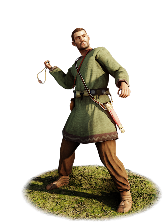
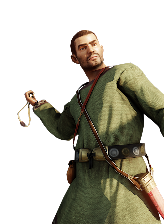
Class: missile · Category: infantry · Men per unit: 40
Description
These slingers have been drafted into the royal army to defend Cappadocia. Wearing long-sleeved Cappadocian tunics, thick trousers, woven native Cappadocian or Phrygian hats, and broad belts, they are well prepared for the winter in the highlands and mountains of eastern Anatolia. Since they lack armour and shields, these men must solely rely on their slings to survive, firing deadly lead bullets at their enemies. For melee, they possess a dagger similar to the Scythian akinakes, which was popular all throughout the Persian Empire. The land of Cappadocia has been strongly influenced by the Persians, and this unit thus resemble slingers one could also have found as light infantry in the armies of the King of Kings.
Historical background
Cappadocia was (and is!) a large region in eastern Anatolia, stretching from the mighty Tauros mountains in the south to the swampy shores of the Black Sea in the north, from the reddish Halys river and the Great Salt Lake/Lake Tatta in the west to rugged Kommagene and the upper Euphrates in the East (Cf. Strab. 12.1.1C533). Thus covering somewhere between 150,000 and 180,000 km² and connecting Asia Minor with the rest of Asia, control over Cappadocia meant significant influence and wealth for any ruler, despite its low population density. Therefore, it was an important part of the Achaemenid Empire, whose great kings controlled it through an elaborate system of fortresses and royal estates (Canepa, The Iranian Expanse (2020), p. 108). When Alexander conquered the empire, he left little impact on Cappadocia, but his actions eventually resulted in the permanent division of the region into Greater Cappadocia in the south and Cappadocia on the Pontos, later known as just ‘Pontos’, in the north. This is explained by the historian and geographer Strabo of Amaseia (ca. 63 BC-25AD), a native of Pontos himself, in his Geography:
‘Cappadocia was divided into two satrapies by the Persians at the time when it was taken over by the Macedonians; the Macedonians willingly allowed one part of the country, but unwillingly the other, to change to kingdoms instead of satrapies; and one of these kingdoms they named “Cappadocia Proper” and “Cappadocia near Tauros” and even “Greater Cappadocia”, and the other they named “Pontos”, though others named it Pontic Cappadocia’ (Strab. 12.1.4 C534).
The kings of Cappadocia Strabo mentions are the Ariarathids, who had originally been Achaemenid satraps. Their rise is described by Diodorus of Agyrion (ca. 90-30 BC), a contemporary of Strabo:
‘At about this time, Alexander of Macedon defeated and overthrew the Persians, and then died; Perdikkas, who at this point held the supreme command, dispatched Eumenes (of Kardia) to be military governor of Cappadocia. Ariarathes (I) was defeated, and fell in battle, and Cappadocia itself and the neighbouring regions fell to the Macedonians. Ariarathes (II), the son of the late king, regarding the situation as hopeless for the present, retired with a few followers to Armenia. Not long after, Eumenes and Perdikkas having died, and Antigonos and Seleukos being elsewhere engaged, he obtained an army from Ardoates, king of Armenia, slew Amyntas, the Macedonian general, expelled the Macedonians from the land in short order, and recovered his original domain’ (Diod. 31.19.4-5).
The Ariarathid kingdom of Cappadocia originally encompassed 8 “strategies” (provinces): Cappadocian Cilikia, Tyanitis, Garsauritis, Laviansene, Sargarausene, Saravene, Chamanene, and Morimene. To this, Ariarathes II and Ariarathes III (280-220 BC) added the valuable Kataonia and Melitene (Strobel, s.v. Kappadokia, in: DNP online). The capital and largest city was Mazaka, later Caesarea, today accordingly known as Kayseri (Sofou, Strabo and the Historical Geography of Cappadocia (2005), p. 760). Though Cappadocia had an important cavalry tradition (see the respective unit descriptions), the new kingdom lacked regular infantry. Many of its levies would initially have fought as light infantry or skirmishers, and these would continue to make up a significant part of Cappadocian armies going forward.
In Yozgat, a Turkish city on the western fringes of the landscape still known as Cappadocia, a small Archaeological Museum contains a number of items which were of great value to the Cappadocian unit research for RIS. Among these are two stamped lead sling bullets from the Hellenistic period (Buora and Lafli, ‘Five inscribed lead instrumenta from Turkey’, in: Baratta, Instrumenta Inscripta VIII (2021), p. 237) which were found between Ḫattuša, the in our period largely derelict former capital of the Hittite Empire, and Tavion, then a chief town of the Galatian Trokmoi and home to a sanctuary of Zeus (Strab. 12.5.2C567). Since the place where these artefacts were found is situated on the 3rd century BC border of Galatia and Cappadocia, there was some scholarly discussion on the question if they were fired by Galatians or Cappadocians, but the consensus is now that they were indeed Cappadocian (Lafli, Sling Bullets, Cappadocia Conference [2020]). As the bullets are clearly made out of lead, not stone, Cappadocian slingers must have caused increased damage compared to many other slingers (cf. Buora and Lafli (2021), fig. 1-4).
Nothing else is known about Cappadocian slingers, not least because they are never mentioned in the written sources. Hence, this unit is given simple belts, no shields or armour, and the short akinakes daggers that were present throughout the Achaemenid Empire (cf. (Hdt. 7.54.2). The Cappadocian delegation on the Apadana at Persepolis is also wearing such akinakai (Potts, Nomadism in Iran (2014), p. 70). Trousers and long-sleeved tunics are typical of Anatolian mountain peoples who are accustomed to cold winters. The Cappadocian hats appear on royal coins (e.g., silver issue of Ariarathes II, ca. 301-280 BC [Hoover 805, Simonetta² 2a]). Finally, their woven hats are described by Herodotus as typical headgear in Paphlagonia and Cappadocia (Hdt. 7.72.1), while Phrygian hats were originally Iranian and used from Persis to Cappadocia, called Katpatuka by the Persians (Calmeyer, ‘‘CROWN i. In the Median and Achaemenid periods’’, in: Encyclopaedia Iranica VI (1993), with fig. 14).
Stats
| Rank in roster | ||
|---|---|---|
| Men per unit | 40 | ███······· 30% |
| Attack | 6 | █········· 3% |
| Charge bonus | 0 | █········· 0% |
| Defence | 9 | █········· 1% |
| · armour | 1 | █········· 0% |
| · defence skill | 8 | █········· 2% |
| · shield | 0 | █········· 0% |
| Morale | 5 | █········· 4% |
| Discipline | Low | |
| Training | Untrained | |
| Recruitment cost | 935 dn | █········· 3% |
| Upkeep per turn | 342 dn | █········· 11% |
| Turns to recruit | 2 |
Weapons
| Primary | Secondary | Primary | Secondary | Primary | Secondary | Primary | Secondary | ||||
|---|---|---|---|---|---|---|---|---|---|---|---|
| Attack | 6 | 2 | Charge bonus | 0 | 0 | Type | missile · archery | melee · simple | Damage | blunt | piercing |
| Projectile | stone | — | Range | 150 | — | Ammunition | 35 | — |
Defence
| Primary | Secondary | Primary | Secondary | Primary | Secondary | Primary | Secondary | ||||
|---|---|---|---|---|---|---|---|---|---|---|---|
| Total | 9 | — | Armour | 1 | — | Defence skill | 8 | — | Shield | 0 | — |
Condition and terrain
| Hit points | 1 | Ground: scrub / sand / forest / snow | 0 / 0 / 0 / 0 | Charge distance | 30 | Formations | Square |
Technical stats
| Time between blows (primary / secondary) | 2.5 s / 2.5 s | Extra fatigue in hot climates | 0 | Collision mass per man (1.0 is normal) | 0.83 | Spacing between men: close / loose | 1.2 × 2.8 m / 2.16 × 5.04 m |
| Default ranks | 5 |
In battle: Very good stamina
Who can recruit it
A core roster unit for one faction, which can raise it anywhere it holds the right building:
Any faction holding one of the provinces below can field it.
Exactly what a settlement must have, route by route (7)
| Building | Also requires | Building | Also requires | Building | Also requires | Building | Also requires |
|---|---|---|---|---|---|---|---|
| Any settlement | Garrison Building or Tier 1 Military Industrial Complex · Cappadocian area of recruitment · Any Government (Dependency, Indirect Rule or Direct Rule) · Tier 2 Colony not built | Indirect Rule | Garrison Building or Tier 1 Military Industrial Complex · Tier 1 Colony | Indirect Rule | Garrison Building or Tier 1 Military Industrial Complex · not Greek area of recruitment · Tier 1 Colony | Direct Rule | Garrison Building or Tier 1 Military Industrial Complex · Tier 1 Colony |
| Direct Rule | Garrison Building or Tier 1 Military Industrial Complex · not Greek area of recruitment · Tier 1 Colony | Homeland | Garrison Building or Tier 1 Military Industrial Complex | Homeland | Garrison Building or Tier 1 Military Industrial Complex · not Greek area of recruitment |
Areas of recruitment
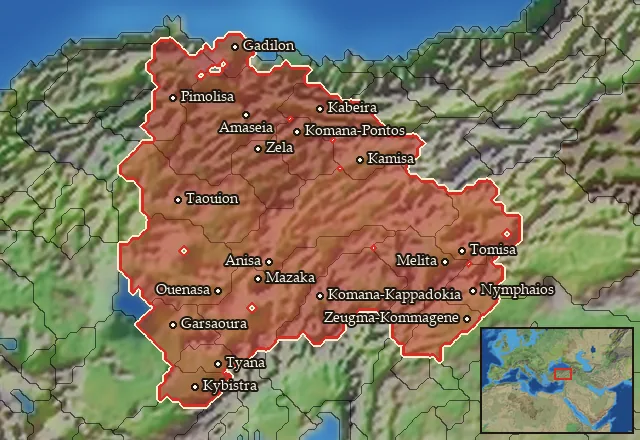
| Zone | Provinces | ||||||
|---|---|---|---|---|---|---|---|
| Cappadocian | 19 |