
Mercenary Southern Illyrian Spearmen
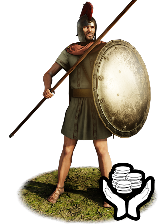
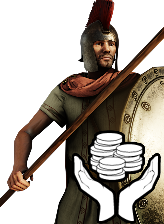
Mercenary. Hired from a regional pool, not recruited from a building.
Class: spearmen · Category: infantry · Men per unit: 40
Description
Southern Illyrian Spearmen are ferocious but sturdy warriors from the various Illyrian tribes in the hills and valleys directly to the north of Macedon and Greece. They have been equipped with Sibyna spears, large round shields similar to the Greek aspis, as well as a variety of helmets of Illyrian and Greek origin. They lack body armour, simply wearing their normal clothes of a cape, a chiton or tunic, making them very vulnerable when flanked. These spearmen are highly mobile, but can still be counted on to hold the line, or deftly manoeuvre and flank their enemy.
Historical background
Hammond suggests that the Greek’s naming of the Illyrians originally came from a small tribe named the Mati, the term later being applied to other similar looking and sounding peoples, a process of linguistic and ethnic extrapolation very similar to what happened with the usage of the names Graeci and Hellenes. The application of the term Illyrian may have expanded correspondingly with Greek knowledge and experience of the tribes on the Ionian coast, then Adriatic coast up to Istria, before finally describing ‘Illyrians’ as far as northern Italy (Hammond, The Kingdoms in Illyria (1966), p. 241.) Herodotus is a good example of this, mentioning Illyrians in Central Albania (ix. 43), in the region of modern Venice (i. 196), and at the source of the river Danube and its tributaries (iv. 49.2).
As the Greeks became more familiar with Illyria, so too did the Illyrians begin to trade with the Greeks and become increasingly influenced by them. Southern Illyrian states like the ethnic Illyrians, the Autariatai, Dardanoi, and Skordiskoi, were the first to be feel the effects of ‘globalisation’ through an increase in trade with Greek or Hellenic states to their south. While the Liburnian League and later the Histrian kingdom on the Adriatic coast were slower to absorb this Greek influence, it was gradually transmitted even further to the Cisalpine and Transalpine Iapodes, finally reaching the Delmatae in the Illyrian hinterland (Dzino: Deconstructing ‘Illyrians’ (2008), p. 49).
The economic and political influence of the Greeks in the centre and Adriatic areas of Illyria had a significant effect on the development of Illyrian identities and material culture. Archaeological evidence has shown many objects in Illyria appear Greek in style or origin, but may have been Greek-Illyrian, that is to say Illyrians imitating and modifying Greek style to suit their own themes (Wilkes, The Illyrians (1996), p. 105). Findings of Hellenistic goods decreased in the fourth to second centuries BC, mostly occurring in areas bordering Macedonia, with almost none found further north. This also possibly shows a loss of Athenian influence or commercial power, or a redirection of Greek interest to Southern Italy and the Adriatic (Wilkes (1996), p. 107). Greek influence in the southern Illyrian regions may have contributed to the gradual move from pastoralism to the adoption of a more agrarian economy and increased urbanisation, although never to the extent of developing an urban lifestyle. Illyrian society stayed focussed on tribal loyalty to a chief (Wilkes, The Illyrians (1996), p. 126).
This heavier Greek influence is reflected in the equipment of the Southern Illyrian Spearmen, as they had better access to Greek style helmets, as well as their own metallurgy, given the greater development of their towns (Wilkes, The Illyrians (1996), p. 128). Archaeological findings of warriors buried with valuables are strong evidence of how they fought at the time, including equipment such as swords, spears, shields, and even imported Greek helmets (Lewis et al., The Cambridge Ancient History: Illyrians and North-west (1994), pp. 425-428).
Stats
| Rank in roster | ||
|---|---|---|
| Men per unit | 40 | ███······· 30% |
| Attack | 10 | ██········ 19% |
| Charge bonus | 12 | ████······ 42% |
| Defence | 39 | ███████··· 70% |
| · armour | 3 | ██········ 21% |
| · defence skill | 31 | ██████████ 95% |
| · shield | 5 | ██████···· 57% |
| Morale | 11 | ████······ 39% |
| Discipline | Normal | |
| Training | Untrained | |
| Upkeep per turn | 607 dn | ████······ 43% |
Weapons
| Primary | Secondary | Primary | Secondary | Primary | Secondary | Primary | Secondary | ||||
|---|---|---|---|---|---|---|---|---|---|---|---|
| Attack | 10 | — | Charge bonus | 12 | — | Type | melee · blade | — | Damage | piercing | — |
| Properties | Light spear (braced against cavalry charges from the front) · +8 attack against cavalry | — |
Defence
| Primary | Secondary | Primary | Secondary | Primary | Secondary | Primary | Secondary | ||||
|---|---|---|---|---|---|---|---|---|---|---|---|
| Total | 39 | — | Armour | 3 | — | Defence skill | 31 | — | Shield | 5 | — |
Condition and terrain
| Hit points | 1 | Ground: scrub / sand / forest / snow | -1 / 0 / -2 / 0 | Charge distance | 30 | Formations | Square |
Technical stats
| Time between blows (primary / secondary) | 2.5 s / — | Extra fatigue in hot climates | 0 | Collision mass per man (1.0 is normal) | 0.94 | Spacing between men: close / loose | 1 × 1.2 m / 2 × 2.4 m |
| Default ranks | 5 |
In battle: Can hide in long grass · Can sap · Very good stamina
Where to hire it
Mercenaries are hired from a regional pool, not recruited from a building. This unit is offered by 5 pools covering 64 regions, at 3,293–3,688 dn to hire and 0–1 experience.
Mercenary pools: Achaea · Epeiros · Illyrians · Odysseus Islands · Pella
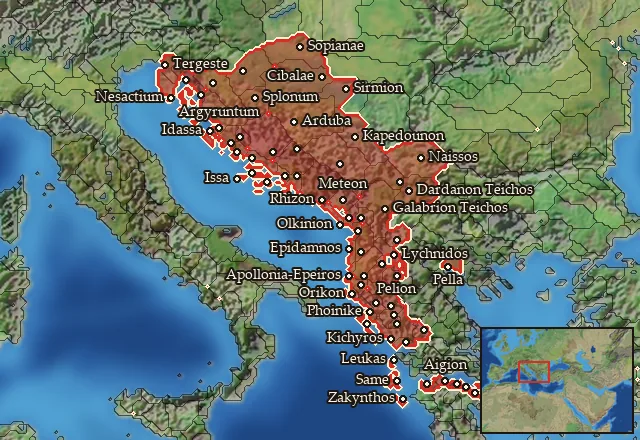
At least one of those pools sells to any faction that has an army in range, with no faction restriction.
Some pools additionally restrict it to Achaean League · Antigonid Kingdom.
The 64 regions where this unit appears in a mercenary pool
Achaia · Akrokeraunia · Amantinia · Ambrakikos Kolpos · Anatolike Achaia · Anatolike Dardania · Andizetia-Azalia · Ano Chaonia · Ardiaia · Athamania · Atintania · Autariataia · Basilike Dassaretia · Boreia Labeataia · Breucia · Byllionia-Amantia · Chaonia · Daesitiatia · Daorsia · Dardania · Dassaretia · Delmatia · Ditionia · Emathia · Epetia-Salonitis · Epidamnia · Galabria · Gylakeia · Hellas · Hesperos Achaia · Hesperos Skordiskia · Histria · Histria Septentrionalis · Iapodia · Illyria · Issa · Kaouia · Kephallenia · Kerkyra · Korinthia
…and 24 more.