

Description
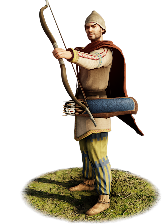
In the lands beyond the Black Sea, the bow rules. Scythians, Sarmatians, Saka, Maiotians – they all rely on their archers, fighting both on foot and mounted. The Sindians, who live on the eastern coast of Lake Maiotis (Sea of Azov), are no exception. Accordingly, these men use the advanced composite bow of the steppe. In a gorytos on their hip, they always carry a huge reservoir of arrows with them. Their thick tunics with long sleeves, their trousers and woollen caps all keep them warm in the brutal winters of the Sindike. While most archers keep their equipment light, wearing no body armour, helmets, or shields, a few afford konos, Pseudo-Illyrian or Pseudo-Chalcidian helmets with cheek guards, or even a linothorax. Short swords are their weapon of choice for melee, with the curved Greek machaira and the straight Scythian akinakes being the most common, with a few double-edged, straight xiphoi thrown into the mix as well. Sindian belts and typical Scythian boots complete their equipment.
Historical background
‘‘After the Maiotai the Sindoi, an ethnos. For they extend also outside the lake (Maiotis, = Sea of Azov). Among them there are the following Hellenic cities: the polis of Phanagoreia, Kepoi, Sindikos limen, Patous.” – Pseudo-Skylax (Peripl. 2.72)
This is what Greeks from outside the Bosporan Kingdom knew of the Sindians in the 4th century BC. This people lived in the Sindike, the modern Taman peninsula on the eastern coast of the Sea of Azov and the extreme northeastern shores of the Black Sea. As the quote from Pseudo-Skylax shows, previously existing Greek cities on this coast like Phanagoreia were also considered to lie in the Sindike, suggesting that the land directly on the Kimmerian Bosporos had been populated by Sindians as well. Little is known about their origins, either as a Scythian subgroup, as proto-Indo-Europeans, Caucasians or even pre-Indo-Europeans (Anfimov, Iz proshlogo Kubani [1958]; Krushkol, Drevnjaja Sindika [1971]; Trubachev, Indo-arica v Severnom Prichernomor'e [1999]). Archaeology and art suggest strong Scythian elements, but also elements of urban cultures, perhaps based on early contacts with the Greeks and/or Iranian groups in the Caucasus and Persia (Cf. Krushkol, Description of burial associations [2010]; Mielczarek, Bosporan Army [1999]). Greek letters on the few surviving coins of the Sindian realm prove that significant Hellenic influence existed as early as the mid-5th century BC (Heinen, Antike am Rand der Steppe (2006), p. 20). In the early 4th century BC, Leukon I, archon of the Bosporan Kingdom, conquered the lands of the Sindian monarchy (Polyain. 8.55; CIRB 6a = IOSPE II 343; Sokolova, New material from the excavation at Nymphaion (2000-1), p. 86). The Sindians lost their independence forever, Greek cities like Gorgippia sprang up in their land, and they now had to supply soldiers to the royal Bosporan army (Mielczarek (1999), p. 40).
The most impressive evidence for Sindian warriors is a stunning limestone statue found in the Kuban in 1896. The man wears a Sindian cap and Sindian clothes with long sleeves and trousers (Medvedeva/Musin, The Imperial Archaeological Commission (1859–1917) (2019), p. 477). He is armed with a bow and a gorytos, and perhaps akinakes. His tunic could also be interpreted as a linothorax (as the wise Jorellaf suggested). Furthermore, there is an excavated settlement in Elizavetovskoe in the area of the Siracian capital Ouspe on the RIS map, which might actually be Maiotian or Sindian (with the Sindians most likely being part of the Maiotians: Strab. 11.2.4C493-494). The burials contain spears, swords, arrowheads, a muscle cuirass with a gorgon, scale armour, and a shield covered with iron stripes (Shilov, Novye dannye ob Elizavetinskom gorodiŝe po raskopkam [1952]; Anfimov, Meotskij mogilʹnik I–II vv. n. è. bliz stanicy Elizavetinskoj [1984]). Furthermore, dozens of swords have been found in the Sindike and were collectively published by Krushkol. Among these, fig. 27.46 and 36.59 could be xiphoi, and fig. 29.51 & fig. 197.142.1 look like an akinakes (Krushkol [2010]). Both of the latter were unearthed in the Anapa region near the farmstead of Rassvet in 1958, which lies on ancient Sindian territory. Meanwhile, fig. 74.108 is a beautifully preserved xiphos, fig. 80.118 once used to be one, and the same is true for fig. 100.148.6 and fig. 203.149.3 (Novichikhin, Grave goods from the Rassvet necropolis (2010), p. 225 provides an overview of different xiphoi and akinakes from Sindian graves around Rassvet near ancient Gorgippia, capital of the Sindian kingdom). In the Bosporan archaeological context, the curved machaira swords are more common and could also have been given to the Sindian soldiers who joined the royal army (Mielczarek (1999), p. 40; pp. 46-67). Finally, remains of a diverse variety of helmets were also found on the territory of the Sindike. Among these are otherwise little-known types termed as pseudo-Illyric and domed (Chalcidian?) helmets, but also konoi and piloi (Symonenko, Sarmatian age helmets (2015), p. 296).
Taking all of this together, the RIS historians had more than enough sources to assemble the Sindian archers. Scythian bows serve as the main weapon, while a mix of akinakes, xiphoi and machairai is used in melee. Clad in Sindian tunics with long sleeves, simple Sindian belts and trousers, they wear Scythian boots and a gorytos each to keep their arrows and bow safe when travelling. Most of the soldiers wear Sindian caps, but some own Pseudo-Illyrian, konos, or Pseudo-Chalcidian helmets, all with additional cheek guards. Since no shields are attested, they have none, but a select few have a linothorax to protect their torso. The heavier equipment is reserved for other units, since the majority of Sindians probably fought as light archers.
Stats
| Rank in roster | ||
|---|---|---|
| Men per unit | 40 | ███······· 30% |
| Attack | 9 | █········· 13% |
| Charge bonus | 0 | █········· 0% |
| Defence | 15 | █········· 8% |
| · armour | 6 | ████······ 38% |
| · defence skill | 9 | █········· 3% |
| · shield | 0 | █········· 0% |
| Morale | 4 | █········· 0% |
| Discipline | Low | |
| Training | Untrained | |
| Recruitment cost | 1,248 dn | █········· 9% |
| Upkeep per turn | 434 dn | ██········ 16% |
| Turns to recruit | 2 |
Weapons
| Primary | Secondary | Primary | Secondary | Primary | Secondary | Primary | Secondary | ||||
|---|---|---|---|---|---|---|---|---|---|---|---|
| Attack | 9 | 3 | Charge bonus | 0 | 8 | Type | missile · archery | melee · blade | Damage | piercing | slashing |
| Projectile | arrow | — | Range | 170 | — | Ammunition | 30 | — | Properties | — | Armour-piercing (counts only half the target's armour) |
Defence
| Primary | Secondary | Primary | Secondary | Primary | Secondary | Primary | Secondary | ||||
|---|---|---|---|---|---|---|---|---|---|---|---|
| Total | 15 | — | Armour | 6 | — | Defence skill | 9 | — | Shield | 0 | — |
Condition and terrain
| Hit points | 1 | Ground: scrub / sand / forest / snow | 0 / 0 / 0 / 0 | Charge distance | 30 | Formations | Square |
Technical stats
| Time between blows (primary / secondary) | 2.5 s / 2.5 s | Extra fatigue in hot climates | 0 | Collision mass per man (1.0 is normal) | 0.9 | Spacing between men: close / loose | 1.1 × 2.6 m / 1.98 × 4.68 m |
| Default ranks | 5 |
In battle: Can hide in long grass · Very good stamina
Who can recruit it
A core roster unit for one faction, which can raise it anywhere it holds the right building:
Any faction holding one of the provinces below can field it.
Exactly what a settlement must have, route by route (5)
| Building | Also requires | Building | Also requires | Building | Also requires | Building | Also requires |
|---|---|---|---|---|---|---|---|
| Any settlement | Garrison Building or Tier 1 Military Industrial Complex · Sindian area of recruitment · Any Government (Dependency, Indirect Rule or Direct Rule) · Tier 2 Colony not built | Indirect Rule | Tier 2 Military Industrial Complex · Tier 1 Colony | Direct Rule | Tier 2 Military Industrial Complex · Tier 1 Colony | Homeland | Tier 2 Military Industrial Complex |
| Any settlement | Garrison Building or Tier 1 Military Industrial Complex · Sindian area of recruitment · Dependency or Indirect Rule · Tier 1 Colony not built |
Areas of recruitment
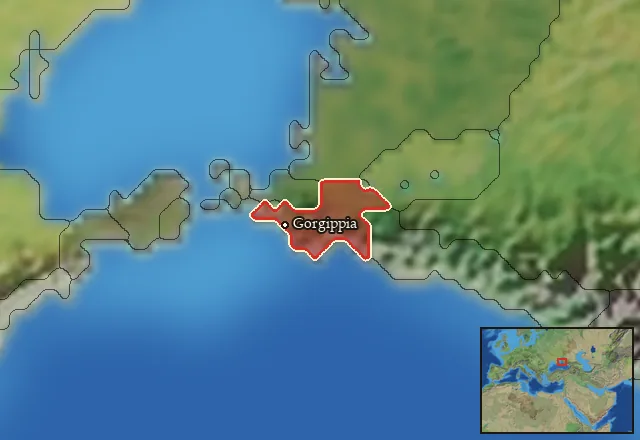
| Zone | Provinces | ||||||
|---|---|---|---|---|---|---|---|
| Sindian | 1 |