
Qanat Irrigated Farming (crops)
3 levels, each replacing the one before it: you upgrade in place rather than building alongside.
Qanat Well (Crops) → Qanat Network (Crops) → Subterranean Aquaducts (Crops)
Levels at a glance
| Level | Cost | Build time | Minimum settlement | Upgrades to | Level | Cost | Build time | Minimum settlement | Upgrades to | ||
|---|---|---|---|---|---|---|---|---|---|---|---|
 | Qanat Well (Crops) | 1,800 | 5 | town | Qanat Network (Crops) |  | Qanat Network (Crops) | 3,200 | 7 | large town | Subterranean Aquaducts (Crops) |
 | Subterranean Aquaducts (Crops) | 5,400 | 9 | city | — |
Costs in denarii, build time in turns.
Qanat Well (Crops)
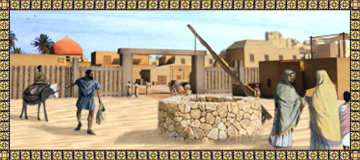
A well and tunnel system that brings underground water to the surface.
A secret passed down from ancestors or whispered by distant strangers: the mountains overlooking our arid lands hold the key to a green paradise. Within them, ancient water swirls that can be tapped by digging a great well into the mountainside. By digging a downward channel through the mountainside, called a qanat or foggara, the water can be brought to the surface to make this land bloom as no one imagined. Though difficult to reach means costly to build and maintain.
Note: Some levels may have both positive and negative growth modifiers due to modding limitations. All effects apply.
Strategy
Qanat irrigated farming is more limited and expensive than rainfed or irrigated farming, but excellent for arid regions with aquifers. Besides higher base price, you pay significant upkeep as a tax penalty. In compensation, it offers reliable way to upgrade settlements to large town or minor city. Most factions get only 2 tiers; factions known to use qanats extensively get a third tier. It gains farming bonus (+1 = +80 income & +0.5 growth) with grain resource. Sulphur has same effect on tier 3. Offers trade bonus for cash crops (fruits, cotton, flax, hemp, dates), increased at tier 3. At tier 3, slave trade hub enables a tax bonus.
Availability
Only available in regions with Aquifer irrigation type, occurring in arid and semi-arid areas.
Limited to:
Tier 3: mountain valley, desert, plateau, steppe
Tier 2: mountains
| Cost | 1,800 denarii | Build time | 5 turns | Minimum settlement | town | Upgrades to | Qanat Network (Crops) |
Requirements: all of these must hold before this level can be built.
- Government Building (Dependency, Indirect Rule, Direct Rule or Homeland)
- Only one farm building allowed
- The region's water source is Aquifer
What it does
- +2 farming level
- -3 taxable income
Show 4 effects that apply only in some circumstances
- +1 trade income, only when the region has Fruits, Cotton, Flax, Hemp or Dates
- From tier 2 onwards this line will gain +1 farming due to resource: grain, only when the region has Grain
- From tier 3 onwards this line will gain +1 farming due to resource: sulphur, only when either Sulphur Fumigant Exports (Industry) is built somewhere in your empire or the region has Sulphur, and the region has no Grain
- Trade bonus due to resources: dates, fruits, cotton, flax, or hemp, only when the region has Fruits, Cotton, Flax, Hemp or Dates
Qanat Network (Crops)
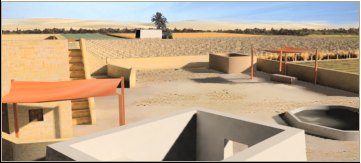
An interconnected network of underground canals for large-scale irrigation.
Having a single well is like having a single thread tying one to life. If civilization is to bloom in this desert, a whole network of mountain wells and qanat channels will do far better. By utilizing multiple hidden aquifers and interconnecting irrigation systems, a larger area can be brought under cultivation and freshwater supply ensured year-round. The effort of extending and maintaining this network has become the primary duty of every tribesman.
Note: Some levels may have both positive and negative growth modifiers due to modding limitations. All effects apply.
Strategy
Qanat irrigated farming is more limited and expensive than rainfed or irrigated farming, but excellent for arid regions with aquifers. Besides higher base price, you pay significant upkeep as a tax penalty. In compensation, it offers reliable way to upgrade settlements to large town or minor city. Most factions get only 2 tiers; factions known to use qanats extensively get a third tier. It gains farming bonus (+1 = +80 income & +0.5 growth) with grain resource. Sulphur has same effect on tier 3. Offers trade bonus for cash crops (fruits, cotton, flax, hemp, dates), increased at tier 3. At tier 3, slave trade hub enables a tax bonus.
Availability
Only available in regions with Aquifer irrigation type, occurring in arid and semi-arid areas.
Limited to:
Tier 3: mountain valley, desert, plateau, steppe
Tier 2: mountains
| Cost | 3,200 denarii | Build time | 7 turns | Minimum settlement | large town | Upgrades to | Subterranean Aquaducts (Crops) |
Requirements: all of these must hold before this level can be built.
- Government Building (Dependency, Indirect Rule, Direct Rule or Homeland)
- Only one farm building allowed
- The region's water source is Aquifer
What it does
- -4 taxable income
Show 6 effects that apply only in some circumstances
- +3 farming level, only when the region has no Grain
- +4 farming level, only when the region has Grain
- +1 trade income, only when the region has Fruits, Cotton, Flax, Hemp or Dates
- Additional +1 farming due to resource: grain, only when the region has Grain
- From tier 3 onwards this line will gain +1 farming due to resource: sulphur, only when either Sulphur Fumigant Exports (Industry) is built somewhere in your empire or the region has Sulphur, and the region has no Grain
- Trade bonus due to resources: dates, fruits, cotton, flax, or hemp, only when the region has Fruits, Cotton, Flax, Hemp or Dates
Subterranean Aquaducts (Crops)

The pinnacle of qanat engineering, creating large, fertile oases.
Just as the mountains have sheltered this precious water from the sun since the world began, we have made sure it stays sheltered until it reaches the very plant it will water. By extending underground qanat channels far beyond the mountain slopes, we ensure water does not evaporate so we can irrigate an even larger area. These extensions required innovative solutions to maintain constant downward trajectory and suitable water pressure. With these efforts, lands that could not produce an ear of grain before have turned into a garden.
Note: Some levels may have both positive and negative growth modifiers due to modding limitations. All effects apply.
Strategy
Qanat irrigated farming is more limited and expensive than rainfed or irrigated farming, but excellent for arid regions with aquifers. Besides higher base price, you pay significant upkeep as a tax penalty. In compensation, it offers reliable way to upgrade settlements to large town or minor city. Most factions get only 2 tiers; factions known to use qanats extensively get a third tier. It gains farming bonus (+1 = +80 income & +0.5 growth) with grain resource. Sulphur has same effect on tier 3. Offers trade bonus for cash crops (fruits, cotton, flax, hemp, dates), increased at tier 3. At tier 3, slave trade hub enables a tax bonus.
Availability
Only available in regions with Aquifer irrigation type, occurring in arid and semi-arid areas.
Limited to:
Tier 3: mountain valley, desert, plateau, steppe
Tier 2: mountains
| Cost | 5,400 denarii | Build time | 9 turns | Minimum settlement | city |
Requirements: all of these must hold before this level can be built.
- Government Building (Dependency, Indirect Rule, Direct Rule or Homeland), and Only one farm building allowed, and the region's water source is Aquifer, and you play an Arab or Iranian (other than Pontus and Characene) faction, or Ilici, Carmo, Hasmonean Kingdom, Musulamii, Garamantes, Nasamones, Chorasmia, Arshi or Kucha, and the region's terrain is Mountain valley; or the region's terrain is Plateau, Desert, Steppe or Hills
What it does
- -1 population growth
- -5 taxable income
Show 7 effects that apply only in some circumstances
- +5 farming level, only when the region has neither Grain nor Sulphur and no Sulphur Fumigant Exports (Industry) is built anywhere in your empire
- +6 farming level, only when the region has Grain or Sulphur, or Sulphur Fumigant Exports (Industry) is built somewhere in your empire
- +2 trade income, only when the region has Fruits, Cotton, Flax, Hemp or Dates
- +5 taxable income, only when the region has Slave Trade or Slave Trading Hub (Urban) is built somewhere in your empire
- Additional +1 farming due to resources: grain, sulphur, only when the region has Grain or Sulphur, or Sulphur Fumigant Exports (Industry) is built somewhere in your empire
- Trade bonus due to resources: dates, fruits, cotton, flax, or hemp, only when the region has Fruits, Cotton, Flax, Hemp or Dates
- Tax bonus is due to local slave trade or factionwide supply, only when the region has Slave Trade or Slave Trading Hub (Urban) is built somewhere in your empire
Traits and retinue
Retinue
| Member | Building | Chance | Member | Building | Chance | Member | Building | Chance | |||
|---|---|---|---|---|---|---|---|---|---|---|---|
| Agricultural Expert | Qanat Network (Crops) or above | 1% | Gardener | Qanat Network (Crops) or above | 2% | Ptolemaic Farming Advisor | Qanat Network (Crops) or above | 1% |