
Healing
3 levels, each replacing the one before it: you upgrade in place rather than building alongside.
Local Healer (Healing) → Physician's Clinics (Healing) → Healing Sanctuary (Healing)
Levels at a glance
| Level | Cost | Build time | Minimum settlement | Upgrades to | Level | Cost | Build time | Minimum settlement | Upgrades to | ||
|---|---|---|---|---|---|---|---|---|---|---|---|
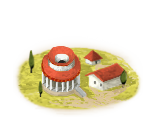 | Local Healer (Healing) | 2,000 | 2 | town | Physician's Clinics (Healing) | 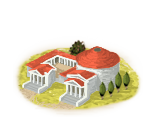 | Physician's Clinics (Healing) | 4,000 | 4 | large town | Healing Sanctuary (Healing) |
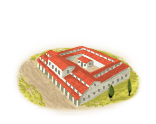 | Healing Sanctuary (Healing) | 6,800 | 6 | city | — |
Costs in denarii, build time in turns.
Local Healer (Healing)
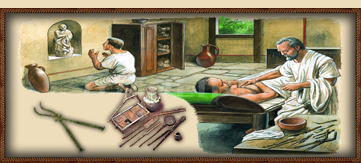
A trained medicus provides basic care for the sick and wounded, improving public health.
The Roman world is harsh, and even the strongest soldier or labourer may fall to injury or disease.
A local medicus is trained in simple remedies, setting broken bones, and stitching wounds. Though his knowledge is limited, his skills can mean the difference between life and death for the citizens of this settlement. The medicus is a man of practical skill, not lofty theory, he stitches wounds, sets bones, and, if all else fails, prescribes strong wine to dull the pain. His remedies may not rival those of Alexandria’s famed scholars, but in a world where even a minor cut can fester into something truly horrifying, his work is the difference between life and an early funeral. Rome does not waste good soldiers, nor useful citizens, so long as they can still stand and pay their taxes.
| Cost | 2,000 denarii | Build time | 2 turns | Minimum settlement | town | Upgrades to | Physician's Clinics (Healing) |
Requirements: all of these must hold before this level can be built.
- Only one sanitation or healing building allowed, Government Building (Dependency, Indirect Rule, Direct Rule or Homeland) and Local Barter or a higher level is built here; or Any Shrine
What it does
- +1 population health
- taxable income -5 to -1, depending on how many settlements your empire holds
Show 1 effect that apply only in some circumstances
- From tier 2 onwards this line will gain bonus health from medicinal herbs, fruits, honey, pitch, or sulphur, only when the region has Perfumes & Medicinal Herbs, Fruits, Honey, Pitch, Bitumen & Tars or Sulphur
Physician's Clinics (Healing)
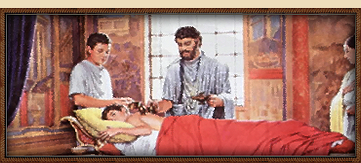
A valetudinarium offers improved medical care, aiding both soldiers and civilians.
Rome’s legions may be unstoppable, but even the finest soldier is still made of flesh and blood, both of which are prone to being spilled.
So, as Rome’s armies march ever onward, its need for organized medical care grows. In the Valetudinarium, the wounded are tended by skilled medici, using bandages, splints, and herbal salves. Here, medici practice their trade, using vinegar to cleanse wounds, splints to mend broken limbs, and strong wine to silence complaints. Though primarily built for soldiers, even civilians may benefit from the expertise of these physicians, and while not all patients emerge unscathed, or at all, it is still an improvement over letting the gods decide their fate.
| Cost | 4,000 denarii | Build time | 4 turns | Minimum settlement | large town | Upgrades to | Healing Sanctuary (Healing) |
Requirements: all of these must hold before this level can be built.
- You do not play a Brittonic, Germanic, Libyan, Scythian or Arab faction, nor Parni, Government Building (Dependency, Indirect Rule, Direct Rule or Homeland) and Local Market or a higher level is built here; or Any Temple
What it does
- taxable income -5 to -1, depending on how many settlements your empire holds
Show 3 effects that apply only in some circumstances
- +2 population health, only when the region has none of Perfumes & Medicinal Herbs, Fruits, Honey, Pitch, Bitumen & Tars or Sulphur
- +3 population health, only when the region has Perfumes & Medicinal Herbs, Fruits, Honey, Pitch, Bitumen & Tars or Sulphur
- Additional +1 health (0.5 growth & 5 public order) from medicinal herbs or local fruits, honey, pitch, or sulphur, only when the region has Perfumes & Medicinal Herbs, Fruits, Honey, Pitch, Bitumen & Tars or Sulphur
Healing Sanctuary (Healing)
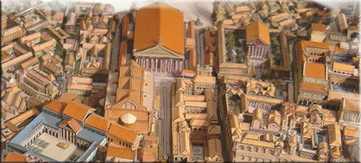
A Sanctuary that ensures the health of Rome’s soldiers and citizens.
In this sanctuary, an esteemed association of skilled physicians trains the next generation of medici in the art of surgery, herbal remedies, and the ever-reliable practice of bleeding a man just enough to (hopefully) not kill him. Within its halls, wounds are stitched, fevers are studied, and sanitation systems are devised to keep the filth of the city at bay. While still limited by the stubborn insistence that bad air causes most ailments, these doctors can perform surprisingly effective surgeries, cauterize wounds with ruthless efficiency, and even recognize patterns of disease, sometimes before half the city has perished from them. With each patient treated, Rome’s mastery over life and death grows ever greater, ensuring that more men may return to the ranks and fewer to the underworld.
Historically, the establishment of the Asclepieion at Rome was also triggered by an onset of plague (293 BC), although the cult of Asclepius/Aesculapius had previously begun spreading into the Italian peninsula during the 5th c. BC. In the face of rising illness in the city, a delegation was dispatched to bring a serpent from Epidaurus – which, upon its arrival at Rome, legend holds, slithered off the ship and swam onto the small island in the midst of the Tiber river. There, the Romans founded an Asclepieion safely removed from the crowded city. Later, the island’s Travertine seawalls were configured to resemble the bow and stern of a Roman ship – a tribute to the original vessel that had arrived from Epidaurus. Today, the water-worn traces of a relief carved on the island’s downstream “bow” still depict Aesculapius’ snake-entwined staff.
| Cost | 6,800 denarii | Build time | 6 turns | Minimum settlement | city |
Requirements: all of these must hold before this level can be built.
- You do not play a Brittonic, Germanic, Libyan, Scythian, Arab, Gallic, Iberian, Thracian, Dacian or Illyrian faction, nor Parni
- Local Market or a higher level is built here
- Government Building (Dependency, Indirect Rule, Direct Rule or Homeland)
- Any Large Temple
What it does
- taxable income -6 to -2, depending on how many settlements your empire holds
Show 7 effects that apply only in some circumstances
- +3 population health, only when the region has none of Perfumes & Medicinal Herbs, Fruits, Honey, Pitch, Bitumen & Tars or Sulphur
- +4 population health, only when the region has Perfumes & Medicinal Herbs and the region has none of Fruits, Honey, Pitch, Bitumen & Tars or Sulphur
- +4 population health, only when the region has no Perfumes & Medicinal Herbs and the region has Fruits, Honey, Pitch, Bitumen & Tars or Sulphur
- +5 population health, only when the region has Perfumes & Medicinal Herbs and the region has Fruits, Honey, Pitch, Bitumen & Tars or Sulphur
- Additional +1 health (0.5 growth & 5 public order) from medicinal herbs or local fruits, honey, pitch, or sulphur, only when the region has Perfumes & Medicinal Herbs and the region has none of Fruits, Honey, Pitch, Bitumen & Tars or Sulphur
- Additional +1 health (0.5 growth & 5 public order) from medicinal herbs or local fruits, honey, pitch, or sulphur, only when the region has no Perfumes & Medicinal Herbs and the region has Fruits, Honey, Pitch, Bitumen & Tars or Sulphur
- Additional +2 health (1 growth & 10 public order) from medicinal herbs and a secondary local resource, fruits, honey, pitch, or sulphur, only when the region has Perfumes & Medicinal Herbs and the region has Fruits, Honey, Pitch, Bitumen & Tars or Sulphur
Traits and retinue
Traits
| Trait | Building | Points | Chance | Trait | Building | Points | Chance | Trait | Building | Points | Chance |
|---|---|---|---|---|---|---|---|---|---|---|---|
| Feeling Poorly | Physician's Clinics (Healing) or above | −1 | 1% | Fruitful | Local Healer (Healing) or above | +1 | 1% | Fruitful | Physician's Clinics (Healing) or above | +1 | 5% |
| Healthy | Local Healer (Healing) or above | +1 | 1% | Popularis Sympathiser | Local Healer (Healing) | +1 | 50% | Popularis Sympathiser | Physician's Clinics (Healing) | +1 | 50–100% |
| Popularis Sympathiser | Healing Sanctuary (Healing) | +1, +2 | 50–100% |
Retinue
| Member | Building | Chance | Member | Building | Chance | Member | Building | Chance | Member | Building | Chance |
|---|---|---|---|---|---|---|---|---|---|---|---|
| Beautician | Local Healer (Healing) or above | 2% | Brehon | Physician's Clinics (Healing) or above | 2% | Chirugeon | Physician's Clinics (Healing) or above | 1% | Chirugeon | Healing Sanctuary (Healing) or above | 1% |
| Doctor | Local Healer (Healing) or above | 2% | Doctor | Healing Sanctuary (Healing) or above | 1% | Druid | Local Healer (Healing) or above | 3% | Healer | Local Healer (Healing) or above | 2% |
| Herbalist | Local Healer (Healing) or above | 2% | Hillel the Elder | Physician's Clinics (Healing) or above | 3% | Master Embalmer | Physician's Clinics (Healing) | 3% | Mysterious “Physician” | Local Healer (Healing) or above | 1% |
| Nicander | Physician's Clinics (Healing) or above | 20–80% | Persian Physician | Physician's Clinics (Healing) or above | 1% | Persian Surgeon | Physician's Clinics (Healing) or above | 2% | Phoenician Physician | Physician's Clinics (Healing) or above | 1% |
| Physician | Local Healer (Healing) or above | 2% | Physician | Physician's Clinics (Healing) or above | 2–4% | Physician | Healing Sanctuary (Healing) or above | 1% | Priest of Airyaman | Local Healer (Healing) or above | 7% |
| Priest of Apollo | Local Healer (Healing) or above | 7% | Priest of Apollo | Physician's Clinics (Healing) or above | 2% | Priest of Aralez | Local Healer (Healing) or above | 7% | Priest of Asklepios | Local Healer (Healing) or above | 2–7% |
| Priest of Asklepios | Physician's Clinics (Healing) or above | 7% | Priest of Benelus | Local Healer (Healing) or above | 7% | Priest of Derzelas | Local Healer (Healing) or above | 2–7% | Priest of Endovelicus | Local Healer (Healing) or above | 7% |
| Priest of Eshmun | Local Healer (Healing) or above | 7% | Priest of Eshmun | Physician's Clinics (Healing) or above | 2% | Priest of Goetosyrus | Local Healer (Healing) or above | 7% | Priest of Imhotep | Physician's Clinics (Healing) or above | 2–7% |
| Priestess of Brigantia | Local Healer (Healing) or above | 7% | Priestess of Hera | Physician's Clinics (Healing) or above | 2% | Priestess of Juno | Physician's Clinics (Healing) or above | 7% | Priestess of Ostara | Local Healer (Healing) or above | 7% |
| Pythia | Physician's Clinics (Healing) or above | 1% | Vates | Physician's Clinics (Healing) or above | 2% | Wise Woman | Physician's Clinics (Healing) or above | 2% | Witch | Physician's Clinics (Healing) or above | 1–3% |
| Yose ben Yoezer | Physician's Clinics (Healing) or above | 3% |